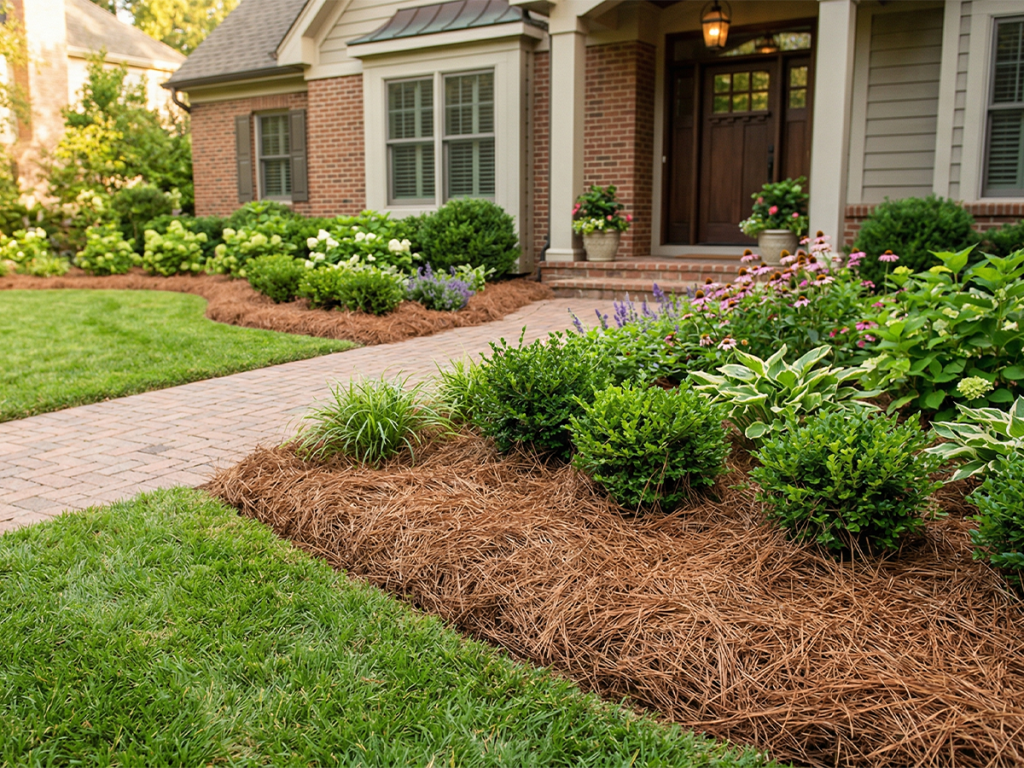
Pine straw is one of the most popular ground covers in the Southeast and Mid-South for a reason — it looks clean, it's traditional, and it does the job of suppressing weeds and holding moisture. But “traditional” doesn't mean “low maintenance.” If you've been reordering bales every season and wondering whether there's a better way, you're asking the right question. Here's an honest look at where natural pine straw costs you more than the bag price, and where artificial pine straw earns back its keep.
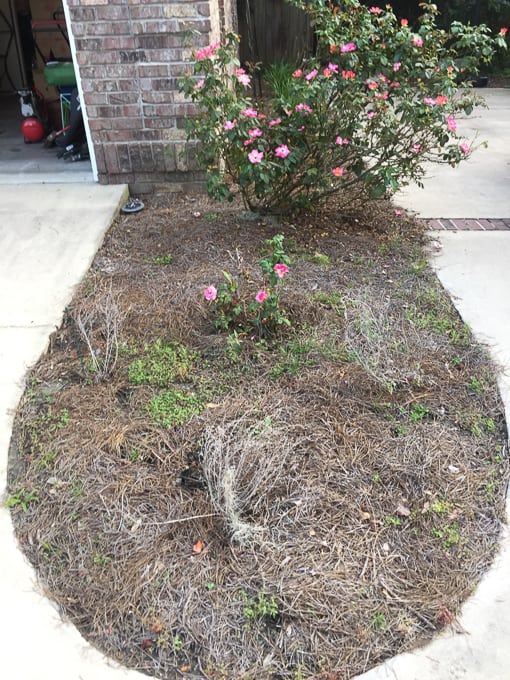
The sticker price on a bale of pine straw is only the beginning of the expense. Natural pine straw breaks down fast — it fades from that rich reddish-brown to a dull gray within months, and it compresses and decomposes as it does its job. That means most properties arere-strawing two to three times a year just to keep beds looking presentable, plus the labor to haul it, spread it, and clean up the old material.
Here's what that decomposition actually looks like a few months after installation — matted, gray, and thinning out at the bed's edge:
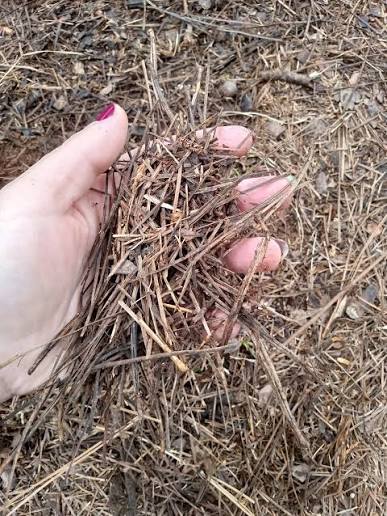
Pick it up and it's easy to see why: the straw itself has gone brittle and broken down into a loose, decomposing mat that no longer holds its shape or color.
For HOAs and property managers, that recurring cycle means recurring vendor visits, recurring labor hours, and recurring disruption to common areas. For homeowners, it means a standing weekend chore that never actually finishes. And every reapplication is more organic material that eventually needs blowing out, raking, and hauling away.
There's also the fire consideration. Dried pine straw is highly combustible, which is why many municipalities and fire marshals flag it in defensible-space and wildfire-mitigation guidance, especially near structures. That's a real liability conversation for schools, commercial properties, and HOAs managing shared risk.
Artificial pine straw is installed once and stays put. It doesn't fade at the rate natural straw does, it doesn't compress into a matted layer like the samples above, and it doesn't need to be replenished every few months. For a property that's currently paying for multiple re-straw visits a year, cutting that down to an occasional touch-up or top-off is where the real savings show up — not in the material cost, but in the labor and vendor time you stop paying for.
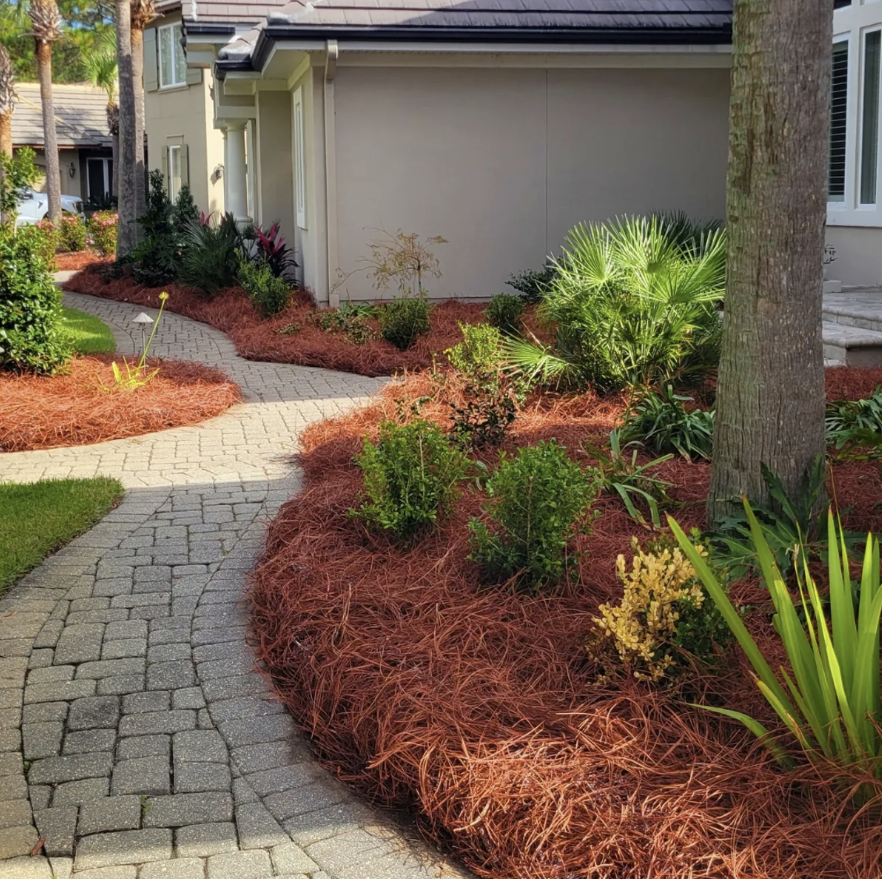
It also holds its color and structure through rain, mowing overspray, sprinkler cycles, and foot traffic in a way loose natural straw simply can't. For commercial properties and HOA common areas where curb appeal is a year-round expectation, that consistency matters — beds look freshly done in December the same way they did in April, without a crew coming back out.
Drainage and weed suppression hold up as well, since a properly installed artificial pine straw system still allows water through while blocking light to the soil underneath — the same principle behind well-designed hardscaping and drainage work.
We're not going to tell you natural pine straw is obsolete — it's not. Some properties prefer the authentic look and feel, some HOA design guidelines specify it, and for smaller residential beds the maintenance burden is more manageable than it is at commercial scale. The calculation changes the most for larger footprints — schools, municipal properties, HOA common areas, sports facilities, and commercial landscaping — where the labor and vendor visits add up fastest and where consistent appearance is non-negotiable.
This isn't just a homeowner decision. It's worth a hard look for:
• HOAs managing entrances, medians, and common-area beds across a large community
• Schools and municipalities balancing appearance standards against maintenance budgets
• Commercial and office properties where landscaping directly affects curb appeal and tenant impressions
• Sports facilities and public parks with high-traffic or high-visibility beds
• Homeowners tired of the seasonal re-straw cycle
Natural pine straw isn't expensive to buy — it's expensive to maintain. Artificial pine straw flips that: a higher one-time installation, then years without the recurring labor, hauling, and replenishment cycle. If your property is re-strawing more than once a year, that's the clearest sign it's worth having the conversation.
Curious whether artificial pine straw is the right fit for your property? Reach out to the EternaTurf team and we'll walk you through what it would look like for your specific beds.